


The ShiPrint Project
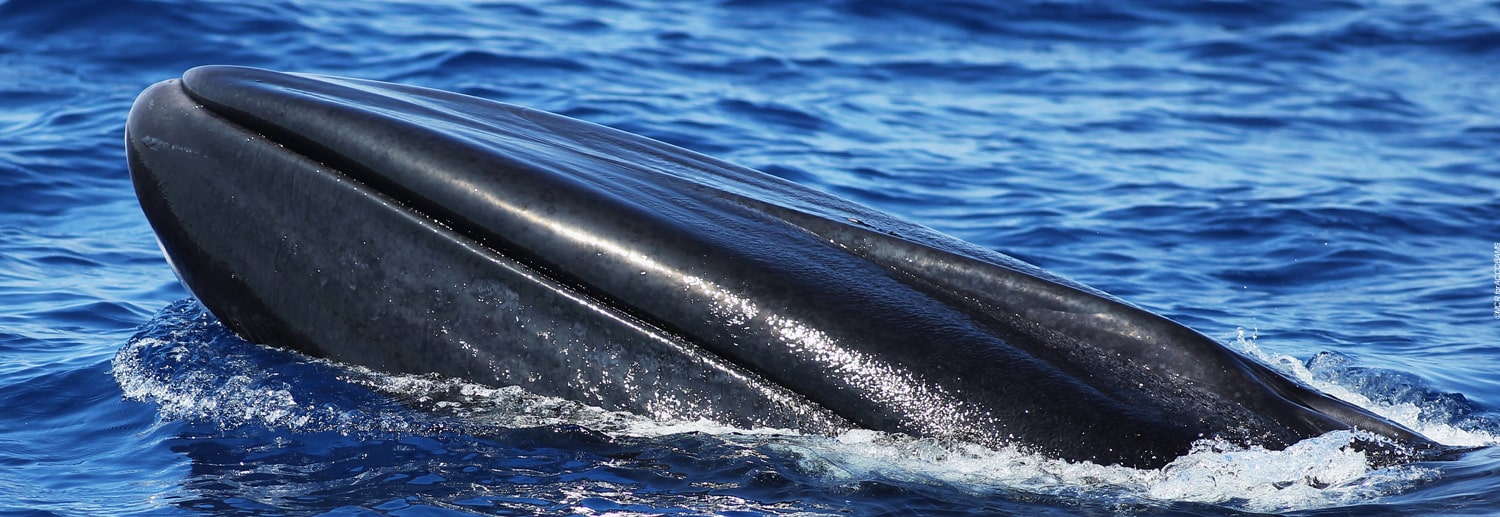
The Mediterranean Sea is one of the world’s great marine biodiversity hotspots. Despite covering less than 1% of the global ocean surface, it is home to around 17,000 marine species, nearly 18% of all known marine life. Among this remarkable diversity are cetaceans, with eleven species living permanently in the basin. The Northwestern Mediterranean, and particularly the Pelagos Sanctuary, is one of the most important regions for these marine mammals. Its waters and deep canyons provide vital feeding grounds for large cetaceans such as sperm whales and fin whales.
But the Mediterranean is also one of the world’s busiest maritime crossroads. Shipping in the Mediterranean represents approximately 15% of global maritime traffic and continues to expand in terms of routes, traffic intensity and vessel size, driven by the growth of cruise tourism, commercial shipping, oil and gas exploration, and recreational yachting.
This maritime shipping activity increasingly overlaps with critical habitats for cetaceans and poses several major environmental risks: greenhouse gas emissions, air pollution, underwater noise, and collisions between vessels and cetaceans. Vessel strikes are a major threat to cetaceans, especially for Mediterranean fin whales and sperm whales, both classified as Endangered by the International Union for Conservation of Nature (IUCN). In the Northwestern Mediterranean, where critical habitats and shipping lanes overlap, the risk of vessel strikes is estimated to be three times higher than in other parts of the Mediterranean Sea.
In response to these concerns and following a proposal by four ACCOBAMS countries (Spain, France, Monaco and Italy), the Marine Environment Protection Committee (MEPC) of the International Maritime Organization (IMO) designated in 2023 the Northwestern Mediterranean Sea as a Particularly Sensitive Sea Area (PSSA). This designation covers waters under the jurisdiction of the surrounding coastal States and includes the Pelagos Sanctuary, the first transboundary marine area in the Mediterranean dedicated to the protection of marine mammals, covering 87,500 km² between France, Monaco and Italy.
The PSSA designation represents a clear recognition of the importance and fragility of this region, as well as its vulnerability to damage from international shipping activities. The designation is accompanied by Associated Protective Measures (APMs) aimed at monitoring and reducing the risk of ships strikes with cetaceans. These measures recommend that vessels navigate with caution in areas where cetaceans are detected or reported and reduce their speed to between 10 and 13 knots, a speed shown to significantly decrease the likelihood and severity of vessel strikes. Furthermore, through Resolution 8.17, ACCOBAMS Parties agreed to “promote the application of vessel speed reductions as an operational measure that results in multi-environmental benefits, including the reduction of underwater noise and greenhouse gas emissions, as well as of the risk of vessel strikes”.
Presentation of the ShiPrint Project
The ShiPrint project was conceived to support the implementation of the Associated Protective Measures (APMs) within the Northwestern Mediterranean PSSA by providing the adjacent coastal States with technical solutions and awareness-raising tools. It places particular emphasis on reducing underwater noise, greenhouse gas emissions, and the risk of vessel strikes involving large cetaceans. The project focuses on the Pelagos Sanctuary as a pilot area. This project began on 1 January 2025 and is expected to conclude on 31 December 2026. It benefits from the support of the Pelagos Initiative and is led by the ACCOBAMS Secretariat, in collaboration with OceanCare, Sinay and We Are Mediterranée.
The ShiPrint project is structured around 4 major components:
1. The development of a new module in the NETCCOBAMS platform, enabling relevant countries to track all AIS-equipped vessels and monitor the implementation of voluntary ship speed recommendations in the PSSA.
2. The organisation of four workshops with stakeholders to assist them in better understanding the shipping sector’s impact on marine biodiversity and to facilitate exchanges on how to reduce the risk of collisions with whales. These workshops will target different vessel categories, as well as relevant national and port authorities in the PSSA, and will be hosted in the three States of the Pelagos Sanctuary.
3. A photo exhibition held in parallel with the Third United Nations Ocean Conference (UNOC 3), aimed at raising awareness of the need to strengthen the protection of cetaceans and marine biodiversity in the Pelagos Sanctuary
4. The proposal of legislative tools for ACCOBAMS Parties on maritime traffic, including the adoption of a Resolution on maritime traffic by ACCOBAMS Parties, and the contribution to the development of a “whale safe” certificate reward vessels for reducing the impact of their activity on cetaceans.
Achieved progress
Regarding the development of a new module in the NETCCOBAMS platform
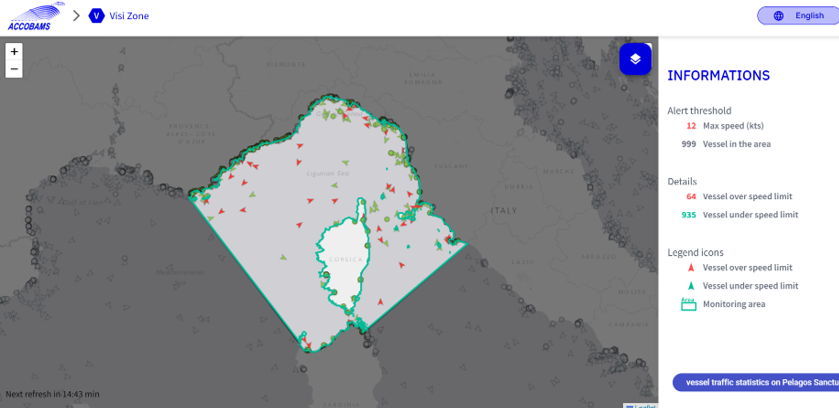
As part of the ShiPrint project, a new VisiZone module has been developed within the NETCCOBAMS platform to help monitor ship traffic in the Pelagos Sanctuary. VisiZone provides an up-to-date map of vessels in the area, showing information such as their location, speed, flag and destination. The data are updated every 15 minutes, making it possible to follow vessel movements in near real time. The tool also provides statistics on ship traffic and helps identify vessels travelling faster than the speeds recommended in the Northwestern Mediterranean PSSA. This makes it possible to monitor changes in vessel speeds over time and compare ship traffic during different periods. The data can also be used to compare the situation before and after the PSSA measures came into effect. By tracking these trends over the coming years, VisiZone will help assess whether the measures are contributing to lower vessel speeds and, ultimately, reducing the risk of collisions between vessels and whales.
Organising workshops to engage stakeholders and promote action to reduce the environmental impact of shipping
Two workshops have already been organized as part of the project:
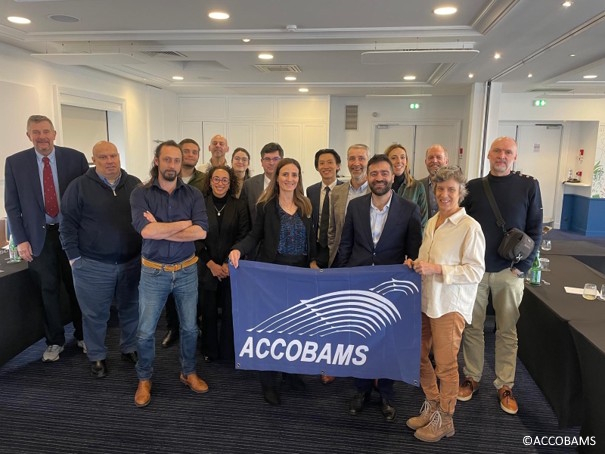
The first workshop, Safeguarding Whales in the Northwestern Mediterranean PSSA, dedicated to the Cargo Shipping Sector, took place on 14 March 2025 in Marseille, France.
It was organized by the ACCOBAMS Secretariat in collaboration with OceanCare, Sinay, and We Are Méditerranée.
The event brought together around 30 participants, including key stakeholders from the cargo shipping sector, but also representatives from coastal States, the Pelagos Scientific Committee, scientists, and conservation organisations, with the objective to discuss strategies for reducing the environmental footprint of the cargo shipping sector and mitigating the risks of collisions with endangered whales.
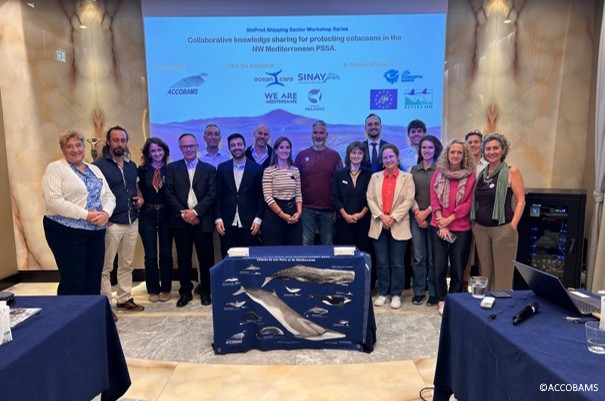
The second workshop, Collaborative Knowledge Sharing for Cetaceans’ Protection in the Northwestern Mediterranean PSSA, dedicated to the Passenger and Cruise Shipping Sector, took place on 2 October 2025 in Genoa, Italy.
It was organized by the ACCOBAMS Secretariat in collaboration with OceanCare, Sinay and the Conceptu Maris Project.
The event brought together around 30 participants with the objective of aligning expertise to enhance the implementation and effectiveness of Associated Protective Measures (APMs) in the NW Mediterranean PSSA and to discuss strategies to reduce environmental pressures from passenger and cruise traffic in the PSSA.
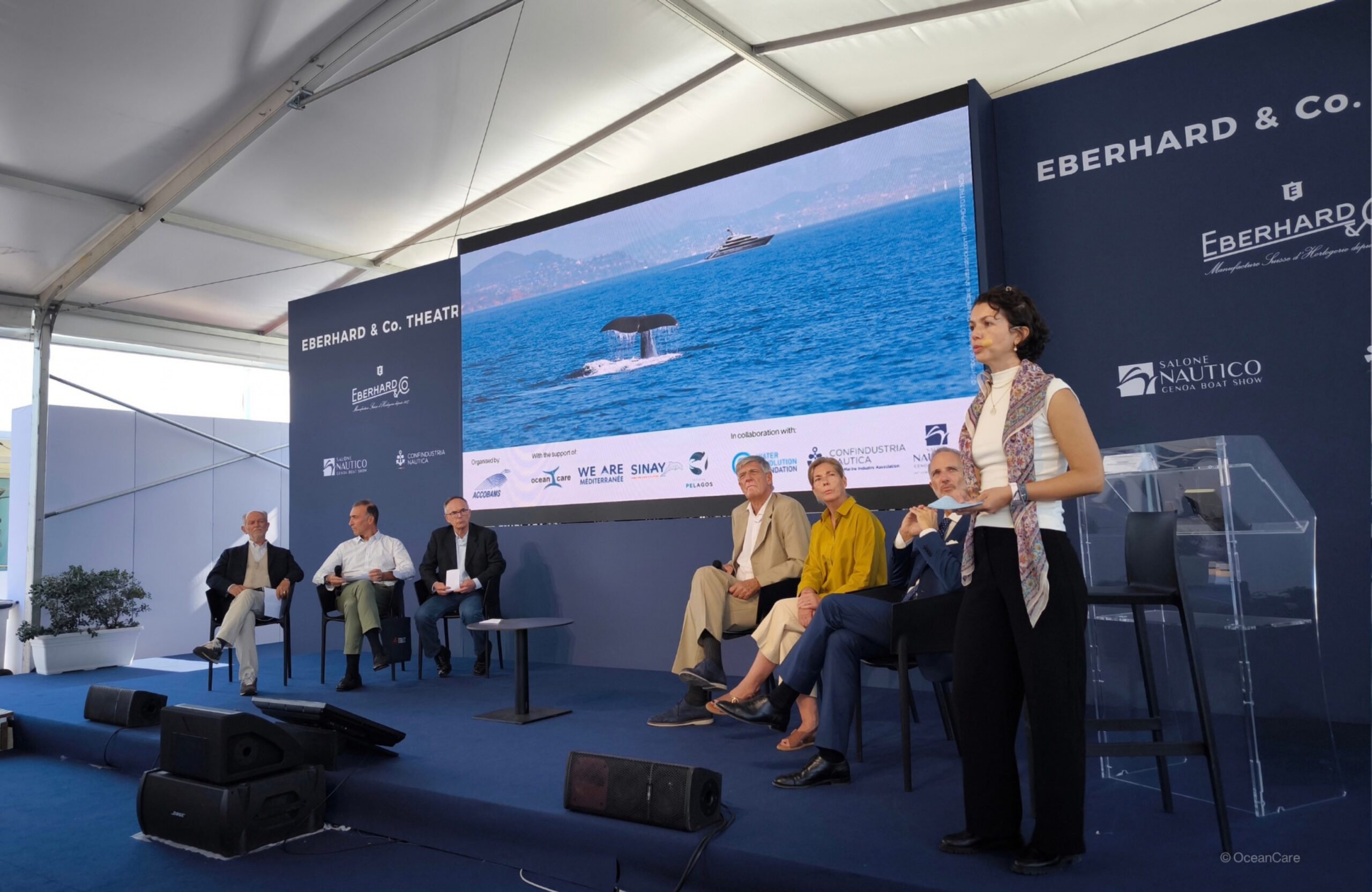
A dedicated side event of the Genoa International Boat Show, focusing on the yachting and pleasure boating sector was organised on 5 October 2026 under the title “Strengthening Efforts and Synergies to Protect Cetaceans in the Northwestern Mediterranean PSSA”.
It brought together stakeholders from the sector to raise awareness and promote dialogue on vessel strikes and underwater noise mitigation and was attended by more than 50 participants.
The event was preceded by an introductory webinar held on 3 September 2026 designed to provide participants with a common baseline of information ahead of the in-person event.
The outcomes of the discussions held during the three workshops will inform a final workshop bringing together representatives of national and port authorities, to be held on 24 November 2026 in Monaco.
Organising a photo-exhibition to raise awareness on cetacean conservation
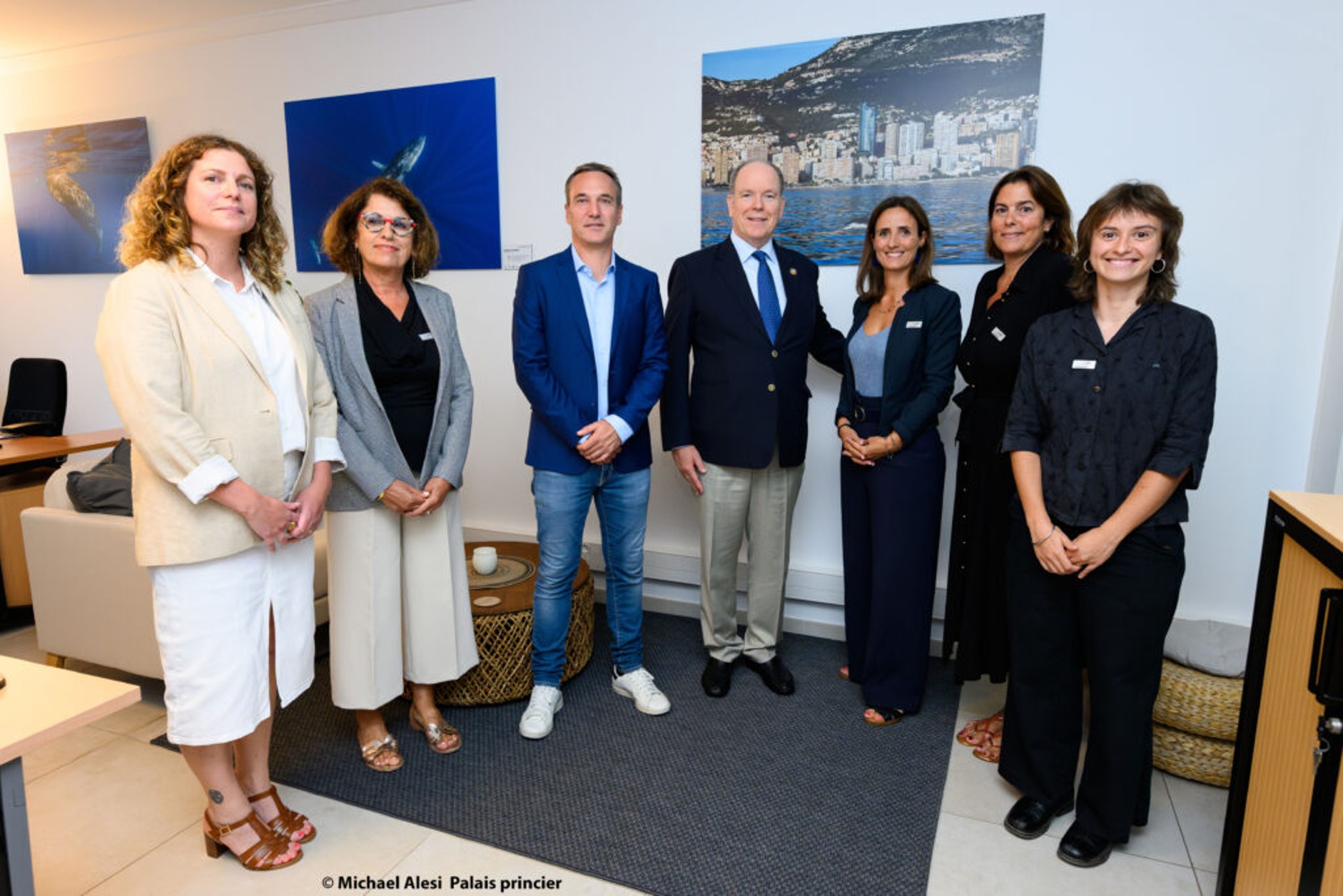
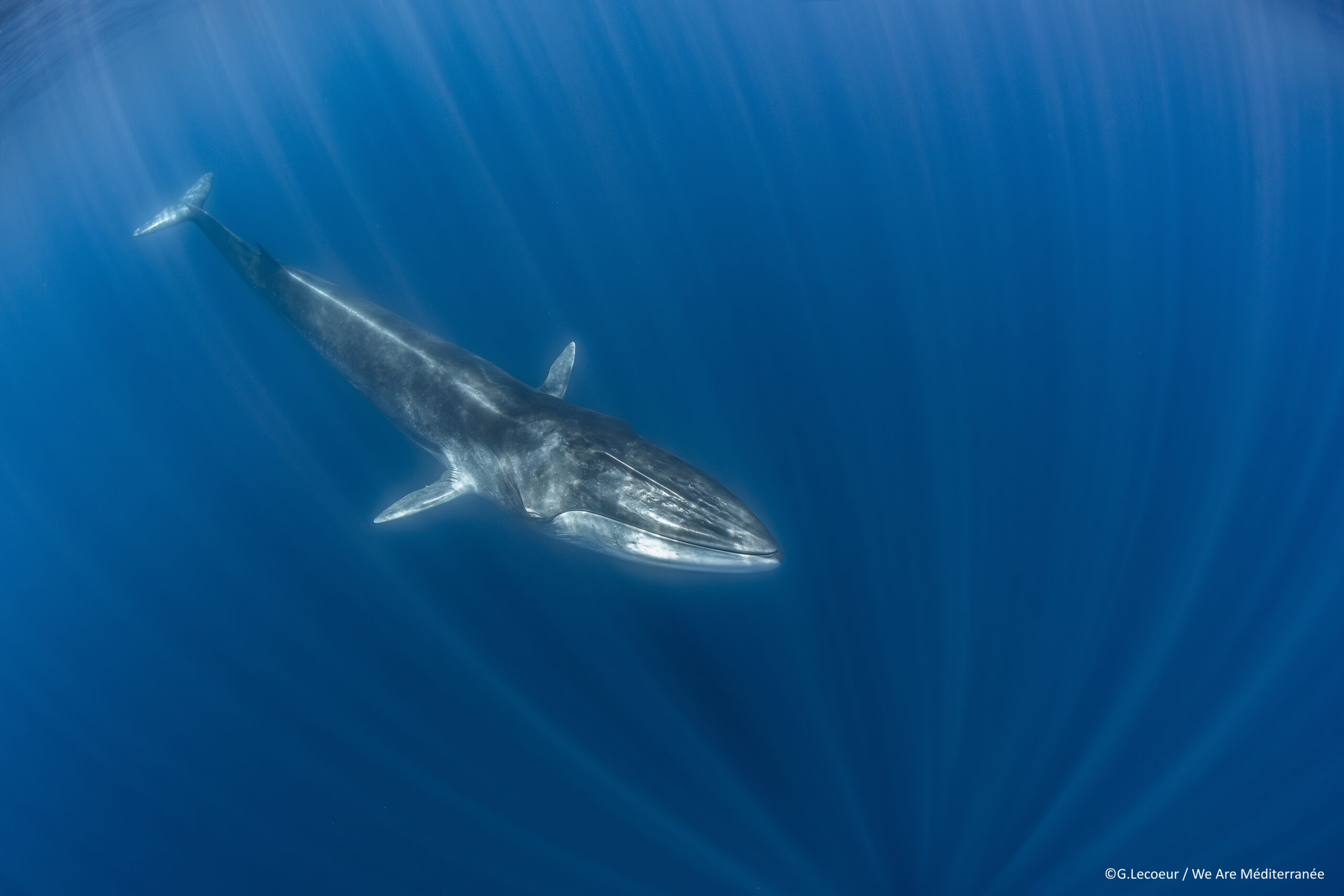
Back to back with the Third United Nations Ocean Conference (UNOC3) held in Nice, the ACCOBAMS Secretariat, in collaboration with the association We Are Méditerranée and the Fédération des Groupements Français de Monaco, organized a photo exhibition entitled “Méditerranée sauvage: cétacés en images, protection en action”. Hosted at la Maison de France in Monaco from 2 to 13 June 2025, the exhibition featured the work of photographer Greg Lecoeur. Through a compelling series of images, the exhibition highlighted the beauty and vulnerability of Mediterranean cetaceans, raising awareness about the threats they face and the urgent need for marine conservation. A private visit by H.S.H. Prince Albert II of Monaco to the photo exhibition was organized on 8 September 2025, in the context of its extension at the premises of the ACCOBAMS Secretariat in the Principality of Monaco.
Developing best-practices guidelines for a whale-safe certificate
The Ninth Meeting of the Parties to ACCOBAMS (Cyprus, 18-21 November 2025) adopted Resolution 9.16 on “Vessel strikes”, asking the Chair of the Scientific Committee to cooperate with the Scientific and Technical Committee of the Pelagos Agreement to create a joint Ship Strikes Working Group with agreed Terms of Reference, including the review of the progress on the development of a reward for “best practitioners” (Whale safe certificate). The ShiPrint project will contribute to developing best-practices guidelines for this certificate, in collaboration with the ACCOBAMS Scientific Committee and the Consortium Pelagos project.